

How to Remain an Author in an Age of Automation
On using AI without surrendering voice
A few weeks ago, I sent the latest draft of my first novel to my agent, and then came the waiting.
Writers know this particular kind of silence. It is the strange, suspended moment between finishing something and knowing what comes next. I did not want to lose momentum, but I also did not know where to direct it.
Around the same time, Anthropic released a new version of Claude, and my favorite AI thinker, Taryn Southern, shared how she was using it to organize her creative archive. On impulse, I gave Claude permission to work inside my writing folder and asked it to catalogue everything I had written over the years. I wanted it to build a map of my projects and suggest where my attention might naturally want to go.
Ten minutes later, I had a spreadsheet listing nearly eighty creative works. Not just finished pieces, but drafts, fragments, abandoned attempts. The sediment of a writing life.
What surprised me was not the efficiency. It was the recognition.
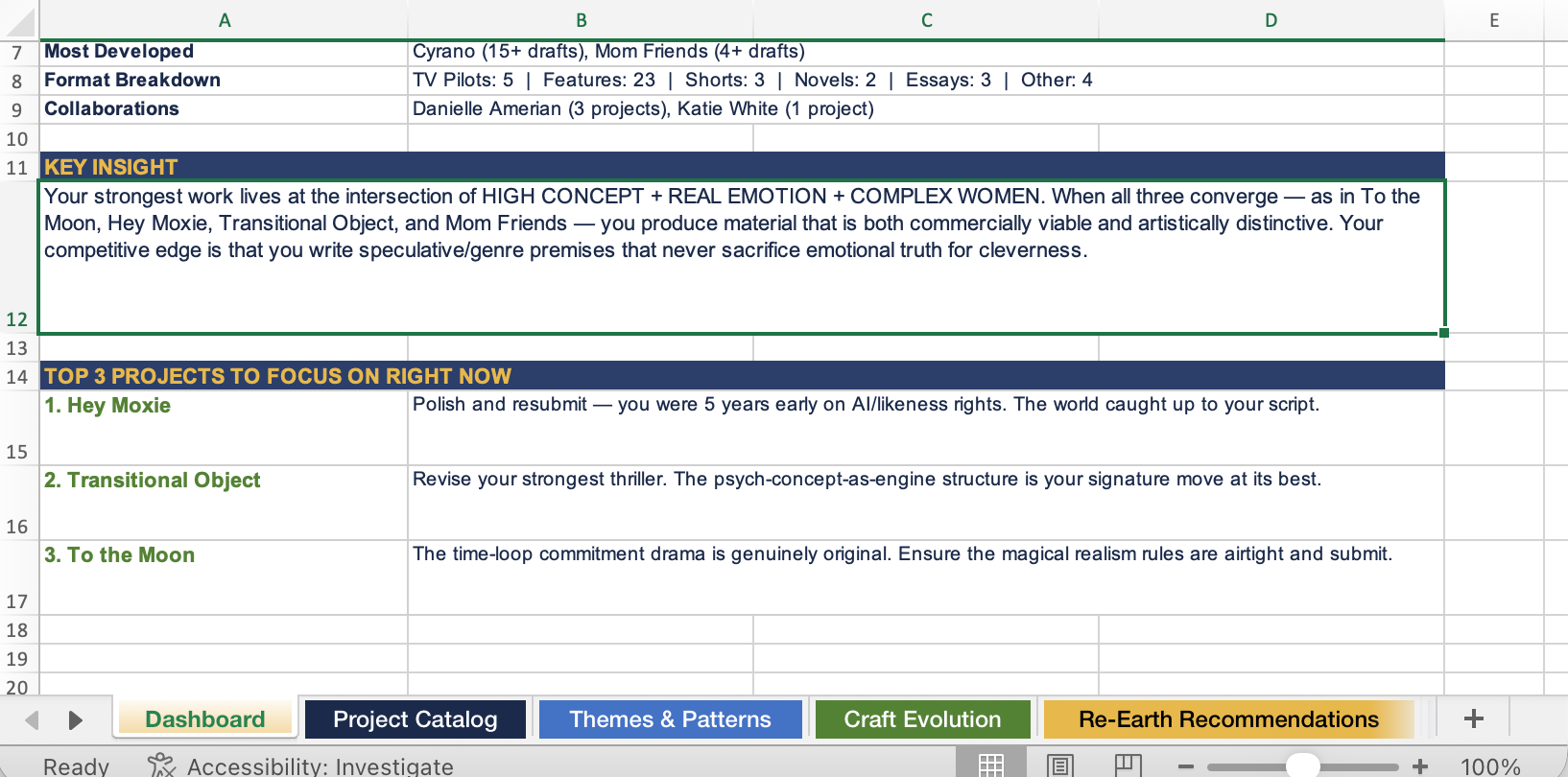
Patterns appeared that I had not consciously tracked. Projects I thought were dormant turned out to be closer to completion than I had admitted. Transitional Object, my next novel, is further along than I tend to believe. And To the Moon, a screenplay I finished just before the fires, had quietly fallen out of view in the chaos of last year. It is close and still needs work, but it is where I am focusing for now while I wait for notes.
The machine did not tell me what to write. It reminded me of what I had already written.
That distinction matters because the real risk of AI is not that it will replace us. It is that it can erode the friction where voice lives. Writing is not just output. It is struggle, delay, obsession, and return. It is the process through which experience becomes form.
Automation removes effort. But effort is where style is born. Used carelessly, AI flattens. Used intentionally, it reflects.
Mapping my projects revealed recurring themes that appear whether I plan them or not. Instead of altering my voice, it helped me recognize it. Instead of accelerating production, it clarified direction. Instead of replacing authorship, it reflected it back to me.
The screenshot below shows you who I am as a writer and what I keep returning to. I feel a little vulnerable sharing it with you. If you try this exercise yourself, I would love to learn what patterns emerge for you.
I am not interested in using AI to write faster. I am interested in using it to stay on the page. To reflect on the work itself. To notice what is actually working rather than spiraling into what might be wrong. To stay grounded in craft instead of getting pulled into the critic that lives in my head.
The goal is not to ignore the next wave of technology. Writers have never done their best work by pretending the future does not exist. The goal is to meet it thoughtfully. To use these tools in a way that keeps us present in our own work. To let them reflect rather than replace. To stay connected to the meaning inside the work.
In the months ahead, I will continue exploring what it means to remain an author in an age of automation. If you are curious about how this might look in practice, subscribe and stay with me.